Reptile Husbandry & Preventive Care
Chameleon Care Guide
A comprehensive husbandry guide for captive chameleons, with general care principles followed by species-specific guidance for veiled, panther, Jackson's, Parson's, Meller's, Oustalet's, flap-necked, African montane, South African dwarf, and pygmy/leaf chameleons. Emphasis is placed on enclosure design, ventilation, temperature and nighttime cooling, UVB and visible light, humidity cycles, hydration, drainage, plants, stress reduction, reproduction, preventive care, and common health problems.

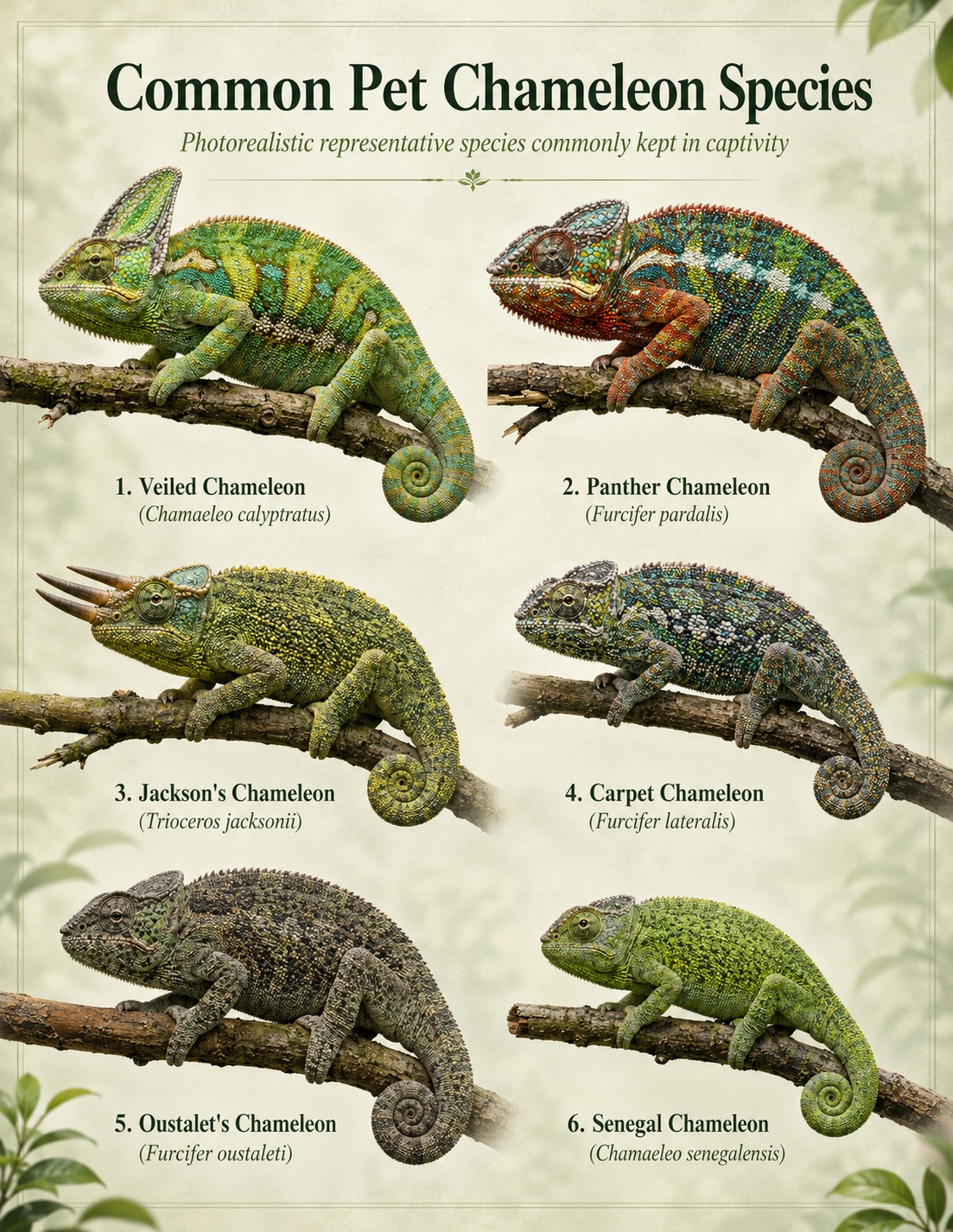
Quick Care Guide
| Parameter | Practical starting point | Important qualification |
|---|---|---|
| Adult enclosure | For a typical medium arboreal species, about 24 × 24 × 48 in (60 × 60 × 120 cm) is a useful minimum starting size; larger is preferred. | Large species such as Meller's, Parson's, and Oustalet's require substantially more usable space. Pygmy/leaf chameleons need a different, lower forest-floor style habitat. |
| Social housing | One chameleon per enclosure. | Most commonly kept chameleons are solitary. Visual contact with another chameleon can be stressful even when animals are physically separated. |
| Basking heat | Species-specific overhead basking zone, commonly about 85–90°F (29–32°C) for many lowland species and about 78–85°F (26–29°C) for many montane species. | Do not apply a veiled-chameleon basking temperature to a cool montane species. The animal must be able to move completely away from the heat. |
| Daytime air | Often about 72–80°F (22–27°C) for lowland species; cooler for many montane species. | Measure the air where the chameleon actually perches, not only at the top or bottom of the enclosure. |
| Night temperature | A meaningful nighttime drop is normal and important; many species do well in the 60s°F (16–21°C), while montane species may require the 50s°F (10–15°C). | Exact targets depend on species, subspecies, elevation, locality, season, and age. Mountain chameleons are especially vulnerable to chronic overheating. |
| Humidity | Provide a daily cycle rather than one constant number. Many species experience moderate daytime humidity and substantially higher nighttime humidity. | High nighttime humidity is safest when temperatures fall and ventilation remains excellent. Warm, stagnant, continuously wet conditions promote disease. |
| Hydration | Moving droplets from misting/rain and/or a dripper; broad wetting followed by drying. | Do not rely on a standing bowl as the only drinking source. Drainage must be designed before installing automated misting. |
| UV exposure | Measured UV gradient with an accessible basking/UV zone and complete deep shade. | Chameleon species differ markedly in natural UV exposure. Lamp percentage or brand name alone does not define the dose reaching the animal. |
| Photoperiod | About 12 hours light / 12 hours dark is a practical household baseline. | Seasonal programs may vary day length for species whose natural history warrants it. |
| Ventilation | High air exchange without persistent drafts or loss of required humidity. | Screen, hybrid, and well-designed solid-sided enclosures can all work when the actual environment is correct. |
| Perching | Dense network of secure natural branches in several diameters with pathways between basking, drinking, hiding, and cooler zones. | Feet should wrap comfortably around branches; provide enough foliage that the chameleon can become visually concealed. |
Species and Ecological Diversity
“Chameleon care” cannot be reduced to a single enclosure, temperature, or humidity formula. The family Chamaeleonidae includes species from Madagascar, mainland Africa, the Arabian Peninsula, southern Europe, and parts of Asia. They occupy habitats ranging from humid rainforest and coastal scrub to seasonal woodland, savanna, and cool mountain forest. Most are arboreal or shrub-dwelling, while several small genera live close to the forest floor.
This guide places greatest practical emphasis on chameleons commonly encountered in private collections and veterinary practice: veiled chameleons (Chamaeleo calyptratus), panther chameleons (Furcifer pardalis), Jackson's chameleons (Trioceros jacksonii), Parson's chameleons (Calumma parsonii), Meller's chameleons (Trioceros melleri), Oustalet's chameleons (Furcifer oustaleti), flap-necked chameleons (Chamaeleo dilepis), other African montane Trioceros and Kinyongia, South African dwarf chameleons (Bradypodion), and pygmy/leaf chameleons in Rhampholeon, Rieppeleon, and Brookesia.
Natural History and Why It Matters in Captivity
Chameleons are highly visual, largely diurnal lizards adapted to three-dimensional vegetation. Their grasping feet, prehensile tails in most species, independently mobile eyes, laterally compressed bodies, and ballistic tongues are specialized for moving slowly through branches and locating prey while remaining visually inconspicuous. Color change is used primarily for communication, physiological regulation, reproductive signaling, and stress responses rather than as an unlimited ability to match any background.
Many chameleons spend much of the day within a relatively small area but continually make fine-scale choices among sun, filtered light, shade, warmer and cooler branches, wetter and drier foliage, and exposed versus concealed positions. Captive care succeeds when the enclosure offers those choices. A cage with one temperature, one exposed perch, and no place to escape heat, UV, or visual attention is biologically inadequate even if its dimensions appear generous.
The slow movement of a chameleon should not be confused with low environmental needs. Arboreal species require enough vertical and horizontal pathways to navigate without climbing the cage walls continuously. Montane species often require a substantial nocturnal temperature drop. Humid species need high water availability without stagnant air. Oviparous females require access to appropriate laying substrate even when they have never been with a male.
Before Bringing a Chameleon Home
Set up the enclosure and operate it before the animal arrives. Run the complete lighting, heating, misting, fogging if used, drainage, and nighttime cooling cycle for several days. Record temperatures, humidity, drainage performance, and UV Index at the actual perch positions. Correct problems before placing a chameleon into the system.
Determine the exact species, sex when possible, approximate age, captive-bred versus wild-caught origin, and geographic locality or subspecies when that information affects husbandry. “Jackson's chameleon,” for example, can refer to forms from different elevations and climates; treating every Trioceros jacksonii identically can produce chronic thermal stress.
A newly acquired chameleon should receive an examination by a veterinarian experienced with reptiles, particularly if it is imported, wild-caught, thin, dehydrated, has closed eyes during the daytime, has an abnormal grip, or has an uncertain history. A fresh fecal sample is useful for parasite evaluation.
Captive-Bred Animals, Legal Trade, and Conservation
Whenever possible, obtain a legally produced captive-bred chameleon from a breeder who can document the species, age, parentage or locality when relevant, feeding history, and prior husbandry. Captive-bred animals generally avoid many of the transport, dehydration, parasite, and acclimation problems associated with wild collection.
International trade in many chameleons is regulated under the Convention on International Trade in Endangered Species of Wild Fauna and Flora (CITES). Appendix status and national or state requirements vary by species and can change. Legal purchase therefore requires more than assuming that an animal offered for sale is permissible. Check current wildlife regulations before acquiring, selling, importing, exporting, or transporting an uncommon species.
Never release a pet chameleon outdoors. Veiled, panther, Oustalet's, and Jackson's chameleons have established nonnative populations in some warm regions after human introduction.
Housing and Enclosure Design
For most medium and large arboreal chameleons, the enclosure should be taller than it is wide and should contain a usable three-dimensional branch network rather than a large empty volume. The principal sleeping and daytime perches should be above normal human eye level when practical; elevated cover often improves the animal's sense of security.
For adult veiled and panther chameleons, approximately 24 × 24 × 48 inches (60 × 60 × 120 cm) should be considered a practical minimum starting size, with larger enclosures preferred. Jackson's chameleons benefit from a similarly generous volume even though some care sources list smaller minimums. Oustalet's, Parson's, and especially Meller's chameleons require substantially more room and stronger furnishings. Very large adults may be better managed in custom enclosures or walk-in systems.
Front-opening access is usually preferable to reaching down from above. Doors must be secure, and electrical fixtures must be positioned so the animal cannot climb onto a hot lamp, chew a cord, or reach an exposed heating element.
Enclosure size alone does not guarantee good husbandry. A tall enclosure that has no safe drainage, no nighttime cooling, insufficient ventilation, or UVB only at an inaccessible height remains unsuitable.
Ventilation and Enclosure Materials
Good ventilation is a core chameleon requirement because routine misting and high nighttime humidity create substantial moisture. The enclosure should exchange air effectively while still allowing the keeper to maintain the humidity and temperature required by the species.
Older husbandry literature often stated that all-glass or solid-sided enclosures were inherently unsuitable and that all-screen cages were mandatory. That rule is too absolute. Screen, hybrid, glass-fronted, and well-designed solid-sided enclosures can all succeed or fail depending on ventilation, room climate, heat load, drainage, and humidity management. In a very dry home, an all-screen enclosure may be difficult to hydrate adequately; in a humid room, the same enclosure may work well. A hybrid enclosure can reduce water loss while retaining cross-ventilation.
- Screen mesh: should be smooth, strong, and appropriately sized. Coarse uncoated wire and sharp hardware cloth can injure feet, nails, rostrum, and skin.
- Fiberglass screening: should be avoided when it can fray or expose abrasive fibers.
- Very fine dense mesh: may substantially reduce UVB and visible light; measure UV at the animal's position after the light passes through the screen.
- Continuous cage-wall climbing: may signal inadequate internal pathways or visual stress and can damage claws and feet.
- Stagnant warm humidity: is a husbandry failure regardless of cage material.
Branches, Plants, and Visual Security
A chameleon enclosure should function as an interconnected arboreal pathway. Provide natural branches of several diameters, mostly horizontal and diagonal, with routes between the basking zone, UV zone, drinking foliage, cooler regions, and dense cover. Branches must be rigidly anchored; a slowly shifting perch is stressful and can cause falls.
The branch diameter should allow the toes to wrap comfortably rather than forcing the foot completely flat or leaving the animal gripping an excessively thick surface. Large species require substantial hardwood branches capable of supporting the entire animal without flexing. Small montane and dwarf species benefit from finer twig networks.
Live plants can provide cover, climbing structure, drinking surfaces, and humidity buffering. Use plants that are positively identified and appropriate for reptile exposure. For species likely to chew vegetation, favor plants known to be edible or non-irritating rather than assuming that a plant commonly used in decorative reptile cages is safe to ingest. Hibiscus is a useful example when grown without pesticides. Ficus species are widely used as structural plants, but freshly damaged stems can release latex sap that may irritate skin and eyes.
Commercial nursery plants may carry surface pesticides, systemic insecticides, fungicides, fertilizers, or plant-growth regulators. Washing leaves removes surface residue but does not remove systemic chemicals taken up by the roots. The safest approach is to obtain pesticide-free plants when possible, repot them in an appropriate clean medium, remove fertilizer granules and contaminated soil, wash foliage thoroughly, and allow a period of clean new growth before use.
Floor, Substrate, and Drainage
For most arboreal chameleons, the floor is primarily a water-management and sanitation surface, not the animal's main living area. Paper, a removable washable floor panel, or another easily cleaned surface is practical during quarantine. A properly designed bioactive or planted substrate system can be used in some established enclosures, but it requires drainage, soil management, plant safety, and the ability to monitor feces and health.
Loose particulate substrate should not be positioned where repeated tongue strikes are likely to collect soil, bark, or gravel. Coarse wood chips, sharp gravel, walnut shell, and other indigestible materials are poor choices. Females of egg-laying species are the major exception: they require access to a dedicated, diggable laying substrate deep enough for species-appropriate nesting behavior.
Drainage is essential
Misting and drip systems can deliver far more water than the chameleon actually drinks. The enclosure must therefore drain reliably into a removable reservoir or plumbed drain. Standing water beneath plants or in the cage floor promotes bacterial and fungal growth, attracts insects, and can create dangerously high continuous humidity.
Test the drainage system under the longest expected misting cycle before the animal is introduced. Include an overflow plan for a stuck valve or leaking hose when automated systems are used.
Temperature, Basking Heat, and the Nighttime Drop
Chameleons are ectotherms. Their activity, digestion, hydration behavior, reproduction, and immune function depend on access to suitable temperatures, but many chameleons—especially montane species—are physiologically stressed by prolonged warmth.
Create a localized overhead basking zone rather than heating the entire enclosure to one high temperature. Incandescent or halogen-style basking lamps can provide broad radiant heat from above. Position all heat sources outside the animal's reach and use a guard where contact is possible. Under-tank heaters and hot rocks do not reproduce normal arboreal basking behavior and are not recommended as primary heat sources.
For many lowland species, daytime ambient air in the 70s°F (low to mid-20s°C) with a basking area in the mid- to upper-80s°F (about 29–32°C) is appropriate. Veiled chameleons may use somewhat warmer basking sites, while Jackson's and other montane species generally require cooler daytime conditions.
A nighttime temperature drop is not optional decoration. It is a normal part of the daily cycle for most species and especially important for montane chameleons. Turn visible lights off at night. If the room is naturally warm, air conditioning or a dedicated cooled reptile room may be necessary for high-elevation species; adding more mist or fog does not substitute for the required temperature drop.
How to Measure Temperature Correctly
| Device | Best use | Important limitations |
|---|---|---|
| Digital thermometer with wired probe | Continuous measurement of air temperature in a major perch zone. | Place the probe in free air near the perch, not directly against a basking branch or cage wall. |
| Second digital probe | Monitoring the cool or lower region. | One thermometer cannot demonstrate that the enclosure has a usable gradient. |
| Infrared thermometer | Spot-checking branch and surface temperatures beneath the basking lamp. | It measures surfaces, not air. Shiny or reflective materials can distort readings. |
| Thermostat or dimming controller | Limiting excessive heat from a compatible heat source. | Use an independent thermometer to verify actual conditions; a thermostat probe can be displaced. |
| Data logger | Documenting the full day/night cycle, especially in montane species. | Useful for identifying brief overheating or failure to cool adequately at night. |
Check temperatures at several heights and at the actual basking branch. Repeat measurements after replacing a lamp, changing a screen top, moving branches, adding dense foliage, changing room climate control, or altering the mist/fog cycle.
UVB, UVA, Visible Light, and the Basking Zone
Modern reptile lighting should be thought of as a controlled approximation of a patch of daylight rather than as a single “UV bulb.” UVB supports cutaneous vitamin D3 synthesis and calcium physiology, UVA contributes to reptile color vision and behavior, bright visible light supports normal activity and circadian signaling, and overhead radiant heat completes the functional basking zone.
A quality linear fluorescent UVB source is generally the most practical way to create a broad usable zone. For many medium arboreal chameleons, arrange the basking heat, bright visible light, and UVB so their beams overlap over a branch network. The chameleon must also have foliage and branches that allow it to retreat to very low UV or complete shade.
Do not select a lamp solely by a label such as “5.0,” “10.0,” or by percentage. The UV reaching the animal changes with fixture reflector, lamp output, distance, screen mesh, plant density, lamp age, and angle. Ordinary glass and most clear plastics block biologically useful UVB.
Species differ in natural UV exposure. Field and experimental research demonstrates that panther chameleons actively regulate UV exposure and that species-specific natural UV environments matter. Conversely, field measurements from some shade-dwelling Malagasy Calumma species support much lower UV exposure. The practical lesson is to provide a measured gradient, not to assign every chameleon the same high UVI.
Checking UV Output: Test Cards Versus UV Index Meters
UV-sensitive test cards
Reusable photochromic cards can confirm that some ultraviolet energy is reaching a perch and can be useful for comparing the same fixture and distance over time. Place the card at the height of the chameleon's back, not immediately beside the lamp.
These cards are qualitative. A color change does not tell you the exact UV Index, does not necessarily distinguish the biologically relevant UVB band from other ultraviolet wavelengths, and cannot prove that exposure is species appropriate.
UV Index meter
A calibrated reptile-oriented UV Index meter, such as a Solarmeter 6.5/6.5R or equivalent instrument, is the preferred quantitative tool. Measure at the animal's back height on the highest accessible basking branch, then map the surrounding branches and the shaded retreat. Recheck after replacing lamps or moving screens and periodically as lamps age.
Humidity and the Day-Night Cycle
Humidity should be managed as a cycle. Many chameleon habitats become relatively drier and warmer during the day and much more humid as temperatures fall overnight. Captive care should reproduce that pattern where it is appropriate rather than holding the enclosure at one continuously high humidity.
A digital hygrometer placed near a representative perch is more useful than an analog dial attached to a wall. In larger enclosures, two sensors can reveal meaningful differences between the upper basking region and the lower foliage.
- Allow branches and leaves to dry between major daytime wetting events unless the exact species' ecology indicates otherwise.
- High nighttime humidity should accompany cooler nighttime air and good ventilation.
- Warm fog in a stagnant enclosure can worsen respiratory and skin risk; fog is most appropriate during the cool part of the cycle when used at all.
- Persistent condensation on all surfaces during the warm daytime period usually indicates inadequate ventilation or excessive water delivery.
- Montane and dwarf species may require cool humid nights that cannot be achieved safely in a warm room without environmental cooling.
Drinking Water and Hydration
Most chameleons are stimulated to drink from droplets on leaves and branches. A standing water bowl should not be considered the sole water source. Effective systems commonly combine misting or rain with a dripper that creates moving droplets over foliage.
Misting or rain systems
A misting cycle should be long enough to wet foliage thoroughly and give the chameleon time to recognize and respond to the water. Brief sprays that evaporate immediately may raise humidity without producing an adequate drinking opportunity. Automated systems are useful because they provide consistency, but they must be checked for clogged nozzles, disconnected hoses, and reservoir contamination.
Drippers
A dripper can provide a prolonged daytime drinking opportunity. Direct the water onto leaves or a clean branch where droplets are visible and allow the excess water to drain completely. A dripper should never create a stagnant puddle in the enclosure.
Foggers
Cool-mist foggers can be useful for species that experience cool, humid nights, but they must be cleaned and disinfected frequently. Use them only when nighttime temperatures are appropriate; creating saturated warm air is not a substitute for cooling.
Methods to avoid as routine care
- Waterfalls and recirculating fountains: readily become contaminated with feces and biofilm and are difficult to disinfect adequately.
- Melting ice cubes: provide cold water at an unpredictable rate and are unnecessary when controlled drippers and misters are available.
- Bathroom shower sessions: repeated transport and high-pressure water can cause substantial stress and should not replace an enclosure-based watering system.
Chronic inadequate hydration can contribute to renal disease and secondary visceral gout. However, signs such as sunken eyes or orange urates are not diagnostic by themselves; eye appearance, urates, weight, behavior, environmental history, and veterinary examination should be interpreted together.
Outdoor Sunlight and Fresh Air
Secure outdoor exposure can provide excellent natural light and behavioral enrichment when climate permits. The enclosure must be predator-proof and escape-proof and must always provide substantial shade. A chameleon in an outdoor enclosure must be able to move away from direct sun; even a cool day can produce dangerous radiant heat in an exposed cage.
Never place a glass or clear-plastic enclosure in direct sun. It can overheat rapidly. Screen or otherwise highly ventilated outdoor cages are safer, but shade and measured temperature remain essential.
Outdoor exposure does not eliminate the need for a safe indoor lighting system when the animal spends significant time indoors. Transition animals gradually and monitor them closely during the first outdoor sessions.
Handling, Acclimation, and Human Interaction
Chameleons are primarily animals to observe rather than frequently handle. Many tolerate calm routine interaction, but frequent forced handling can cause substantial stress.
Allow a newly acquired animal time to establish normal basking, drinking, sleeping, and enclosure use before nonessential handling. Approach slowly from the front or side and avoid grabbing from above. Whenever possible, offer a hand or portable branch and allow the chameleon to climb voluntarily.
Support the animal's feet and body without squeezing the ribs or pulling the tail. Never uncoil a strongly gripping tail by force. If the chameleon freezes, flattens, gapes, lunges, repeatedly retreats, develops intense stress coloration, or tries to leap, end the interaction.
Handling should be limited when the animal is ill, gravid, newly imported, severely dehydrated, or acclimating after transport.
Normal Behavior and Communication
- Basking: normal after lights come on and intermittently during the day. Persistent basking all day may indicate that ambient conditions are too cool.
- Seeking deep foliage: normal for rest, shade, and visual security. Constant hiding with abnormal coloration or inactivity can indicate stress or illness.
- Color change: reflects communication, temperature, light, reproductive state, and stress as well as background adaptation.
- Slow deliberate locomotion: normal. Repeated falls, poor grip, trembling, or inability to support the body are not normal.
- Gaping: may be a defensive display or thermal behavior, but persistent open-mouth breathing away from a heat source can indicate respiratory disease.
- Eye movement: alert daytime chameleons normally keep both eyes open and actively scan. Closing one or both eyes during the day is an important illness or husbandry warning sign.
- Sleeping coloration: many species become paler or develop a distinctive nighttime pattern; this can be useful for finding the animal during a quiet visual check.
- Descending to the floor: can occur during exploration or reproductive behavior, but repeated floor sitting in an arboreal species should prompt review of temperature, hydration, reproductive status, and health.
Sex Identification
Sexual dimorphism varies greatly among species, and very young animals may be difficult to sex. Do not forcefully probe the cloaca or attempt to evert hemipenes at home.
| Species/group | Useful external clues | Cautions |
|---|---|---|
| Veiled Chamaeleo calyptratus | Males have a tarsal spur on the back of each hind foot from hatching and develop a larger casque and body size. | The tarsal spur is the most useful early external feature. |
| Panther Furcifer pardalis | Males become larger and much more brightly colored and develop a more obvious hemipenal bulge at the tail base. | Juvenile coloration can be misleading; locality colors vary. |
| Jackson's Trioceros jacksonii | Adult males of commonly kept forms usually have prominent horns; females are typically smaller with reduced or absent horns. | Horn development varies among subspecies and females of some forms may carry small horns. |
| Meller's, Parson's, Oustalet's, flap-necked | Size, coloration, rostral or head structures, tail-base contour, and reproductive behavior may assist in mature animals. | External sexing is less reliable in some individuals; breeder or veterinary confirmation may be needed. |
| Montane, dwarf, and pygmy/leaf groups | Species-specific ornamentation, tail length, coloration, and body proportions are used. | Correct species identification is required before applying a sexing rule. |
Reproductive Considerations
Most chameleons are egg-laying, but Jackson's chameleons and several other Trioceros give birth to live young. Females of oviparous species may develop and lay infertile eggs without ever being housed with a male.
Egg-laying females
A mature female should have access to an appropriate laying site before she is visibly in crisis. The laying container must be deep and wide enough for the species, filled with a moist-but-not-waterlogged diggable substrate that will hold a tunnel. Provide privacy around the laying area. Repeated disturbance can cause a female to abandon a tunnel.
Restlessness, persistent digging, repeated travel to the enclosure floor, reduced interest in normal activities, and abdominal enlargement may accompany reproductive cycling. These signs are not specific enough to diagnose normal gravidity versus follicular stasis or dystocia.
Live-bearing species
Jackson's chameleons retain developing young internally and give birth to live neonates. A gravid female needs especially careful thermal, hydration, and stress management. Newborns should not remain crowded with the female or with larger juveniles.
Species-Specific Husbandry Guidelines
The following ranges are practical starting points synthesized from veterinary guidance, modern husbandry resources, natural-history data, and published research. They should be adjusted to the exact species, subspecies/locality, sex, age, enclosure design, season, measured behavior, and veterinary findings. The goal is not to force every enclosure to one number; it is to create a biologically appropriate gradient and daily cycle.
| Species/group | Adult space | Thermal emphasis | Humidity / water emphasis | Major caution |
|---|---|---|---|---|
| Veiled Chamaeleo calyptratus | ≥24×24×48 in; larger preferred | Warmest of the common trio; bask ~85–90°F with 70s°F ambient and a clear night drop | Moderate daytime humidity, high cool nighttime humidity; strong dry-out cycle | Females commonly produce infertile clutches; provide laying substrate and avoid chronic overheating. |
| Panther Furcifer pardalis | ≥24×24×48 in; larger preferred | Bask ~85–90°F; ambient low-mid 70s°F; night commonly 60s°F | Moderate day humidity with substantially higher cool nights | Needs a measured UV gradient; published research shows natural UV environment matters. |
| Jackson's Trioceros jacksonii | 24×24×48 in preferred for adults | Cool montane; gentle bask ~80–85°F; cool days; pronounced night drop often into 50s–low 60s°F | Good hydration and high nighttime humidity with airflow | Chronic warmth is a major risk; locality/subspecies matters. |
| Parson's Calumma parsonii | Large custom enclosure; substantially larger than standard 2×2×4 | Cool-to-moderate forest climate; gentle bask, cool retreats, seasonal variation | High water volume and humid nights with excellent ventilation | Very large, slow-maturing, long-lived, conservation-sensitive; ordinary pet-store cages are inadequate. |
| Meller's Trioceros melleri | Very large custom/walk-in system strongly preferred | Moderate daytime temperatures and cool nights | Large-volume drinking opportunities and robust drainage | Large body size, strong stress response, and many historically wild-caught animals. |
| Oustalet's Furcifer oustaleti | Large custom enclosure, generally ≥36×24×48 in and preferably larger | Warm lowland pattern; bask mid-upper 80s°F, cooler night | Moderate daytime humidity, humid night/rain cycle | Large size and reproductive requirements are often underestimated. |
| Flap-necked Chamaeleo dilepis | About 24×24×48 in for many adults | Warm day with cooler night; seasonal and locality variation | Moderate day humidity with rainfall/humidity cycling | Many animals in trade have historically been wild-caught; quarantine and parasite evaluation are important. |
| African montane Trioceros, Kinyongia | Species-size dependent; tall, densely planted, well ventilated | Cool days, gentle bask, very cool nights for high-elevation forms | Humid nights, frequent clean water, strong ventilation | Overheating is frequently more dangerous than mild coolness. |
| South African dwarf Bradypodion | Moderate planted enclosure with fine branching; species dependent | Cool-moderate; gentle bask and cool night | Moderate-humid with daily drying and night rise | Small body size makes dehydration and overheating develop rapidly. |
| Pygmy / leaf Rhampholeon, Rieppeleon, Brookesia | Lower, heavily planted forest-floor enclosure rather than a tall canopy cage | Cool and shaded; little or very gentle basking | Humid leaf-litter microclimate with ventilation | Do not house them under a hot, bright veiled/panther setup. |
Veiled Chameleon — Chamaeleo calyptratus
Veiled chameleons originate from Yemen and adjacent areas of the Arabian Peninsula where they use vegetated valleys and seasonally productive habitats. Their reputation as a “hardy beginner chameleon” should not obscure their need for measured UVB, daily hydration opportunities, strong ventilation, and reproductive management.
- Enclosure: at least about 24 × 24 × 48 in for an adult, with larger dimensions preferred. Use dense branching and foliage with a clear open basking zone.
- Temperature: a practical adult basking surface/branch target is roughly 85–90°F (29–32°C), with most daytime air in the low to upper 70s°F (22–27°C). Some veterinary references permit warmer basking sites, but chronic excessive heat should be avoided.
- Night: a distinct drop into approximately 60–70°F (16–21°C) is useful; healthy animals can tolerate cooler nights when acclimated and dry enough to avoid cold-wet stress.
- Humidity: allow relatively drier daytime air, often around 40–60% in many homes, followed by a marked nighttime rise when temperatures fall. The enclosure should dry between major daytime wetting events.
- UV/light: provide a broad measured UV and bright-light zone with deep shade. A UVI around the low single digits at an accessible basking branch is a reasonable starting point, but verify the actual exposure with a meter and the animal's behavior.
- Reproduction: adult females can produce infertile eggs. A suitable laying container should be available before obvious pre-laying behavior develops.
Panther Chameleon — Furcifer pardalis
Panther chameleons are native to northern and eastern Madagascar and nearby islands and occur in a range of warm, seasonally humid lowland habitats. Captive localities differ in coloration but share broadly similar environmental needs.
- Enclosure: at least about 24 × 24 × 48 in for most adults, with additional width and height encouraged.
- Temperature: bask about 85–90°F (29–32°C); general daytime air commonly 72–78°F (22–26°C); night commonly 60–70°F (16–21°C).
- Humidity: roughly moderate daytime humidity with a strong nighttime increase is more natural than maintaining 80–90% continuously. High overnight humidity requires cool temperatures and ventilation.
- UV/light: panther chameleons are particularly well studied. They can behaviorally regulate UV exposure, and controlled reproductive studies support matching UV exposure to natural conditions. Provide a broad UV gradient and true shade rather than one intense narrow spot.
- Reproduction: females are oviparous and need a private diggable laying area even when eggs are infertile.
Jackson's Chameleon — Trioceros jacksonii
Jackson's chameleons originate from cool, humid mountain habitats in East Africa. This is the most important commonly kept example of why chameleon species must not share one thermal prescription. The forms maintained in captivity can differ in elevation and climate.
- Enclosure: a 24 × 24 × 48 in adult enclosure is preferred even though smaller minimums appear in some care sheets. Dense, fine-to-medium branching and foliage should occupy much of the volume.
- Temperature: use a gentle basking area around 80–85°F (27–29°C) with cooler ambient air, often roughly 68–77°F (20–25°C). Persistent daytime temperatures in the upper 80s°F can be dangerous.
- Night: a pronounced drop is essential. Depending on subspecies/locality and acclimation, nights in the 50s to low 60s°F (about 10–17°C) are often appropriate.
- Humidity: provide good daytime airflow, repeated drinking opportunities, and a substantial humidity increase overnight as the air cools.
- UV/light: provide a moderate measured UV zone with dense shade. Sources differ in suggested UVI; use a conservative gradient and allow the animal to regulate exposure behaviorally.
- Reproduction: Jackson's chameleons are live-bearing. Gravid females should be protected from heat stress and excessive disturbance.
Parson's Chameleon — Calumma parsonii
Parson's chameleons are very large, slow-maturing Malagasy forest chameleons associated with humid eastern habitats. Their body size, longevity, slow reproductive biology, and conservation significance make them inappropriate for a standard medium chameleon enclosure.
- Enclosure: use a large custom habitat with substantial horizontal as well as vertical movement. For mature adults, dimensions well beyond 24 × 24 × 48 in are necessary; room-scale or walk-in systems may be appropriate.
- Structure: provide strong broad branches, deep foliage, multiple shaded retreats, and large drinking surfaces.
- Temperature: favor a cool-to-moderate forest profile with a gentle warm basking option rather than an intensely hot canopy. Maintain cool retreats at all times.
- Humidity/water: provide high water availability and strong nighttime humidity with effective drainage and air exchange.
- Seasonality: seasonal temperature and rainfall patterns may be important for long-term health and reproduction. Avoid forcing year-round maximum growth conditions.
- Reproduction: females lay eggs and require deep, secure nesting substrate. This species has very slow reproductive development compared with veiled or panther chameleons.
Meller's Chameleon — Trioceros melleri
Meller's chameleon is mainland Africa's largest chameleon and inhabits treetops in savanna, woodland, and mountain regions of Malawi, Mozambique, and Tanzania. Large size and sensitivity to stress make it a specialized animal rather than simply an oversized veiled chameleon.
- Enclosure: provide a very large custom or walk-in enclosure with heavy branches. An adult may reach roughly 2–2.5 ft (61–76 cm), so ordinary commercial chameleon cages are inadequate.
- Temperature: use moderate daytime temperatures with a broad gentle basking zone and a cool retreat; provide a clear nighttime drop.
- Humidity/water: substantial mist/rain and long drinking opportunities may be necessary, but the enclosure must drain rapidly and remain well ventilated.
- Handling: minimize restraint. The large body can still be injured by falls or by forcing a strong grip loose.
- Source: historically many Meller's chameleons in trade were wild-caught. Captive-bred animals are strongly preferred, and imported individuals warrant intensive quarantine and parasite evaluation.
Oustalet's / Malagasy Giant Chameleon — Furcifer oustaleti
Oustalet's chameleon is one of the world's largest chameleons and occupies varied habitats in Madagascar. Established populations in Florida demonstrate its ability to use warm modified environments, but captive adults still require a very large, structured enclosure and appropriate daily cooling.
- Enclosure: a minimum around 36 × 24 × 48 in may accommodate a smaller adult, but larger custom dimensions are strongly preferred, especially for males.
- Temperature: warm lowland profile with basking in approximately the mid- to upper-80s°F (about 29–32°C), daytime air in the 70s°F, and a nighttime drop.
- Humidity: moderate daytime humidity with rain/mist cycles and a nighttime increase; avoid permanent saturation.
- Structure: use heavy branching, broad foliage, and multiple routes that allow a large animal to turn and pass without rubbing the cage walls.
- Reproduction: females are oviparous and need generous nesting depth and privacy.
Flap-Necked Chameleon — Chamaeleo dilepis
The flap-necked chameleon occurs across a broad area of sub-Saharan Africa and occupies habitats with marked regional and seasonal variation. Captive recommendations therefore need to consider the animal's actual geographic origin when known.
- Enclosure: around 24 × 24 × 48 in is appropriate for many adults, with dense branching and visual cover.
- Temperature: warm daytime conditions with a localized basking area and a clear nighttime drop; avoid treating all localities as equally hot.
- Humidity: use rainfall/misting and dry cycles rather than continuously wet conditions. Seasonal variation can be meaningful.
- Quarantine: because this species has frequently entered trade as wild-caught animals, parasite evaluation, hydration assessment, and acclimation deserve particular attention.
- Reproduction: females lay eggs and require species-appropriate nesting substrate.
Other African Montane Chameleons — Trioceros and Kinyongia
This category includes multiple East and Central African species from high-elevation forest and montane scrub. Their common husbandry theme is cooling, not heat. Exact limits can vary substantially among species.
- Temperature: many do best with daytime air in the mid-60s to mid-70s°F (roughly 18–24°C), only a gentle basking option in the upper 70s to low 80s°F (25–28°C), and nighttime temperatures in the 50s°F (10–15°C) or lower for some high-elevation forms.
- Enclosure: tall, densely planted, strongly ventilated habitat with fine branching and multiple cool shaded zones.
- Humidity: high nighttime humidity can be appropriate when the air is cold; daytime conditions should not remain stagnant and saturated.
- Water: repeated clean drinking opportunities are essential, especially because warm dry rooms can dehydrate small montane chameleons quickly.
- Acclimation: many species are intolerant of sudden heat spikes. A data logger and room-level cooling system are often more useful than trying to correct a hot room with enclosure misting.
South African Dwarf Chameleons — Bradypodion Species
Bradypodion contains small southern African chameleons adapted to shrubs, fynbos, forest edges, gardens, and other locally specific habitats. Their small size permits a smaller enclosure than a panther chameleon, but it also makes thermal and hydration errors develop rapidly.
- Enclosure: use a densely planted enclosure with abundant fine branches and excellent ventilation. Height remains useful, but horizontal shrub-like structure is equally important.
- Temperature: favor cool-to-moderate daytime temperatures, a gentle basking opportunity, and a distinct cool night; avoid hot basking lamps positioned close to the animal.
- Humidity: moderate daytime humidity and humid cool nights with a drying period are appropriate for many species; exact targets should follow locality.
- UV/light: provide lower to moderate measured UV exposure with deep foliage shade and bright diffuse visible light.
- Handling: minimize handling because small limbs and ribs are easily injured.
Pygmy and Leaf Chameleons — Rhampholeon, Rieppeleon, and Brookesia
These small chameleons are an important exception to the typical tall screen-cage model. Many live close to the forest floor among low vegetation and leaf litter. Their enclosure should reproduce a cool, shaded, humid understory rather than a hot open canopy.
- Enclosure: use a lower, planted enclosure with leaf litter, small branches, vertical stems, and abundant cover. Floor area and understory complexity can be more important than extreme height.
- Temperature: keep conditions generally cool, often around the upper 60s to mid-70s°F (roughly 20–24°C) during the day for many species, with only mild localized warming if the exact species uses it.
- Humidity: maintain a humid forest-floor microclimate with good ventilation and clean water droplets. The enclosure should not become anaerobic or waterlogged.
- UV/light: use gentle measured UV and bright diffuse visible light filtered by plants. Very high-output basking setups designed for veiled or panther chameleons can overheat these animals rapidly.
- Species identification: the genera contain ecologically different species; the exact name and collection locality should be established whenever possible before finalizing the environmental program.
Shedding and Skin Care
Chameleons normally shed in patches. Juveniles shed more frequently because they grow rapidly. The animal may become slightly dull before shedding and may rub against branches to loosen old skin.
Do not peel firmly attached skin. Persistent constricting shed around toes, tail, casque, horns, or eyes can damage tissue and warrants review of hydration, humidity cycling, enclosure surfaces, and general health. A chameleon that repeatedly has incomplete sheds may have an underlying husbandry or medical problem rather than simply needing more mist.
Skin abrasions on the rostrum, feet, or toes often indicate cage-wall climbing, rough mesh, an unstable environment, or chronic attempts to escape.
Seasonality, Nighttime Cooling, and Rest Cycles
Chameleons do not undergo one universal “brumation” program like some temperate reptiles. Many species nevertheless experience meaningful seasonal changes in rainfall, temperature, day length, reproductive activity, and food availability.
For the household pet owner, the most important routine cycle is the daily nighttime cooling period. Seasonal manipulation should be conservative unless the natural history of the exact species is known and breeding or zoological management requires a more complex program.
Do not intentionally deprive a sick or underweight chameleon of normal heat, hydration, or veterinary care in an attempt to induce a seasonal rest. Unexpected prolonged inactivity, daytime eye closure, weight loss, or failure to resume normal behavior should be evaluated medically.
Cleaning, Disinfection, and Water-System Maintenance
- Remove feces, urates, shed skin, dead insects, and contaminated plant material promptly.
- Wipe and disinfect accessible perches and cage surfaces as needed without leaving irritating chemical residue.
- Empty and clean drainage reservoirs before biofilm and odor develop.
- Clean misting reservoirs routinely; do not allow standing water to remain warm for long periods.
- Flush or descale misting nozzles as needed so altered spray patterns do not leave the enclosure dry.
- Disassemble and disinfect fogger reservoirs, tubing, and outlets according to manufacturer guidance; biofilm can aerosolize microorganisms.
- Use separate cleaning tools for quarantined animals.
- Never mix disinfectants, bleach, acids, ammonia, or other cleaning chemicals.
- Rinse products when required by the label and allow strong fumes to dissipate before returning the animal.
Live plants complicate complete disinfection. If a contagious disease is suspected, the treating veterinarian may recommend discarding porous furnishings and plants rather than attempting to sterilize them.
Salmonella and Household Hygiene
Reptiles can carry Salmonella and other enteric organisms without appearing ill. Chameleons, cage surfaces, plant leaves, water-system equipment, feces, and cleaning tools should therefore be treated as potentially contaminated.
- Wash hands with soap and water after handling the chameleon or anything from its enclosure.
- Do not clean reptile equipment in kitchen sinks or food-preparation areas.
- Keep reptile supplies away from dishes and utensils used for people.
- Do not kiss reptiles or allow them near the face.
- Do not allow chameleons to roam on kitchen counters or dining surfaces.
- Young children, older adults, pregnant people, and immunocompromised individuals require particular attention to household hygiene around reptiles.
Quarantine for a Newly Acquired Chameleon
House a new chameleon separately from established reptiles, preferably in a separate room or at least with complete visual and equipment separation. A 60–90 day minimum quarantine is a practical starting period, with extension when parasites, respiratory disease, skin disease, weight loss, or an uncertain import history is present.
During quarantine, favor furnishings that can be inspected and cleaned easily while still providing branches, cover, heat, UVB, and hydration. Record body weight, fecal appearance, appetite, drinking, shedding, eye behavior, and activity. Submit one or more fecal examinations when indicated, especially in wild-caught or imported animals.
Do not use routine blind deworming as a substitute for diagnosis. The presence, burden, species, life cycle, clinical signs, and condition of the chameleon should guide parasite treatment.
Routine Health Monitoring and Preventive Veterinary Care
Chameleons often conceal illness until disease is advanced. A simple written record can identify gradual change much earlier than casual observation.
- Body weight: use the same gram scale at regular intervals. Growing juveniles can be checked weekly or every two weeks; stable adults at least monthly.
- Grip and gait: note whether all feet grasp firmly and the animal can support its body without tremor.
- Eyes: both eyes should normally be open and actively scanning during the day.
- Basking: note duration and location; a persistent change may reveal a thermal problem or illness.
- Hydration: observe drinking opportunities, urates, eye fullness, skin/soft-tissue appearance, and weight together rather than relying on one sign.
- Mouth: look for swelling, discoloration, mucus, plaques, jaw deformity, or inability to close the mouth normally.
- Feet/nails: inspect for missing nails, swelling, pressure injuries, and abrasions from screen.
- Skin: monitor burns, retained shed, wounds, focal discoloration, edema, and nonhealing lesions.
- Feces and urates: record major changes in volume, frequency, consistency, blood, parasites, or persistent abnormal urates.
- Reproductive behavior: track digging, abdominal enlargement, coloration, pairing history, and prior clutches in females.
A preventive examination after acquisition and at least annually thereafter is valuable. Older animals, reproductive females, animals with prior renal disease, and uncommon species may benefit from more frequent monitoring and periodic laboratory testing based on veterinary assessment.
Common Diseases and Health Problems
| Problem | What owners may notice | Important associations / prevention |
|---|---|---|
| Metabolic bone disease / nutritional secondary hyperparathyroidism | Weak grip, tremors, bowed limbs, pliable or deformed jaw, inability to climb, fractures, tongue dysfunction, weakness. | Associated with calcium/vitamin D imbalance, inadequate or inappropriate UVB, and thermal errors. Prevention requires integrated lighting, nutrition, and temperature management. |
| Dehydration, renal disease, and gout | Weight loss, reduced activity, abnormal urates, weakness, swollen joints, reluctance to move, persistent dehydration history. | Chronic inadequate water availability and renal insufficiency can contribute to secondary visceral or articular gout. Warm dry husbandry is especially hazardous for montane species. |
| Ocular disease | One or both eyes closed during the day, swelling, discharge, repeated rubbing, inability to aim normally, retained material around the turret. | Can reflect local eye disease, systemic illness, dehydration, hypovitaminosis, foreign material, infection, or inappropriate lighting. Daytime eye closure should not be dismissed as sleepiness. |
| Stomatitis / oral infection / abscess | Oral swelling, mucus, pus-like material, discoloration, bad odor, difficulty closing the mouth or using the tongue. | Trauma, immunosuppression, nutritional disease, and systemic infection can contribute. Reptile abscesses often require surgical and diagnostic management. |
| Respiratory disease | Persistent gaping away from heat, open-mouth breathing, increased effort, wheezing, mucus, bubbles, lethargy. | Risk increases with inappropriate temperatures, warm stagnant humidity, poor ventilation, aspiration, and systemic illness. |
| Gastrointestinal parasites | Weight loss, abnormal stool, poor growth, reduced activity, dehydration, or no obvious signs. | Especially important in wild-caught/imported chameleons. Fecal diagnosis is preferable to automatic routine deworming. |
| Reproductive disease | Persistent digging, failure to lay, floor sitting, abdominal enlargement, weakness, straining, prolapse, anorexia. | Includes follicular stasis, egg retention/dystocia, and yolk coelomitis. Oviparous females need an appropriate laying site before crisis develops. |
| Thermal burns | Dark, pale, blistered, crusted, or necrotic skin on the casque, back, flank, or limbs. | Prevent direct access to lamps and overheated surfaces. A chameleon may remain beneath damaging heat rather than recognizing a focused burn risk. |
| Foot, nail, and rostral trauma | Missing nails, swollen toes, sores, damaged lips/nose, bleeding, inability to grip. | Often related to abrasive screen, hardware cloth, repeated cage-wall climbing, or inadequate internal branch networks. |
| Tongue injury or dysfunction | Missed strikes, inability to retract the tongue, shortened tongue projection, tongue hanging from mouth. | Trauma, dehydration, metabolic disease, eye disease, oral disease, and neurologic problems may contribute. An exposed or non-retracting tongue is urgent. |
| Edema | Swelling beneath the throat, neck, limbs, or body; generalized puffiness. | Edema is a sign, not a diagnosis. Nutritional imbalance, renal/hepatic disease, reproductive disease, inflammation, and vascular problems are among possible causes. |
| Skin infection / dermatitis | Ulcers, crusts, spreading discoloration, nonhealing wounds, moist or necrotic areas. | Trauma, burns, persistently wet surfaces, poor sanitation, and systemic disease can predispose. Culture/biopsy may be needed. |
| Obesity / overconditioning | Excessive casque or body fat, reduced activity, bulky body contour, reproductive complications. | Energy intake, activity, reproduction, and environmental stimulation interact. The feeding plan is covered in the separate diet guide. |
| Trauma and falls | Lameness, bruising, fractures, inability to grasp, sudden weakness. | Unstable branches, forced handling, falls from outside the enclosure, other pets, and metabolic bone disease increase risk. |
| Cloacal prolapse | Red or pink tissue protruding from the vent. | May involve colon, reproductive tract, bladder, or hemipenis and can follow straining, parasites, reproductive disease, or other illness. Keep tissue moist and seek urgent care. |
Warning Signs That Require Veterinary Attention
Safe Transport
Transport chameleons in a secure, darkened, well-ventilated container sized to prevent falls. For most medium and large arboreal species, a padded branch or tightly wedged rolled towel can provide a stable gripping surface. Very small species may be safer in a smaller ventilated container with soft foliage or paper to prevent tumbling.
Protect the carrier from direct sun, cold drafts, and vehicle heating vents. Never leave a reptile in a parked vehicle. If supplemental warmth is required, use an external wrapped heat source that cannot contact the animal and monitor the temperature. Montane species can overheat rapidly in a closed carrier.
For veterinary visits, bringing a photograph of the enclosure and recent temperature/humidity/UV records can be as valuable as bringing a fecal sample.
Recommended Equipment Checklist
- species-appropriate enclosure with secure front access;
- screen or hybrid ventilation appropriate to room climate;
- dense natural branch network in several diameters;
- safe live or artificial visual cover, with pesticide-free live plants when used;
- overhead basking lamp in a safe fixture/guard;
- quality linear fluorescent UVB fixture and lamp;
- bright visible-light LED or other appropriate daylight source;
- timers for all daylight lamps;
- thermostat/dimming controller where compatible with heat source;
- at least two digital probe thermometers or a multi-probe data logger;
- infrared thermometer for surface checks;
- digital hygrometer, preferably with min/max recording;
- preferably a calibrated UV Index meter such as a Solarmeter 6.5/6.5R or equivalent;
- optional UV-sensitive test card for qualitative checks only;
- automatic misting/rain system or reliable hand-misting system;
- dripper where useful for the species;
- optional cleanable cool-mist fogger for species requiring cool humid nights;
- proper cage-floor drainage and overflow-safe collection reservoir;
- gram scale for routine weight monitoring;
- species-appropriate laying container for mature oviparous females;
- quarantine tools and reptile-safe cleaning/disinfection supplies;
- secure transport container.
Feeding and Nutrition — Reserved for the Companion Article
The comprehensive feeding and supplementation chapter is intentionally omitted from this care guide. Use the current Chameleon Diet Guide for feeder selection and variety, gut-loading, supplementation, species-specific feeding, life-stage changes, and feeding safety.
This separation prevents important husbandry topics from being compressed and allows future nutrition updates to be made without rewriting the entire care handbook.
Selected References and Source Material
- Driggers T. Old World Chameleon Care. LafeberVet. 2024. Veterinary client guidance for natural history, caging, temperature, humidity, water, behavior, reproduction, and common clinical concerns.
- Baines FM. UVB Lighting for Reptiles. LafeberVet. August 20, 2024. Evidence-based review of UVB, UVA, visible light, IR-A, Ferguson Zones, lamp selection, and UV Index measurement.
- Rich G. Care and Housing for Chameleons. VCA Animal Hospitals. 2023. Veterinary husbandry background; exact enclosure and lighting recommendations are interpreted alongside newer species-specific sources.
- Divers SJ, Comolli JR. Nutritional, Metabolic, and Endocrine Diseases of Reptiles. Merck Veterinary Manual. Full review July 2025. Peer-reviewed veterinary reference for gout, renal disease, metabolic bone disease, and husbandry-associated disorders.
- Ferguson GW, Gehrmann WH, Vaughan MS, et al. Is the natural UV zone important for successful captive propagation of the Panther Chameleon (Furcifer pardalis)? Zoo Biology. 2021;40:150-159.
- Karsten KB, Ferguson GW, Chen TC, Holick MF. Do panther chameleons bask to regulate endogenous vitamin D3 production? Experimental evidence for behavioral regulation of UVB exposure.
- Hoby S, Wenker C, Robert N, et al. Nutritional metabolic bone disease in juvenile veiled chameleons (Chamaeleo calyptratus) and its prevention. Journal of Nutrition. 2010;140:1923-1931.
- Pimm RH, Dutton C, O'Handley S, Mastromonaco GF. Assessment of the reproductive status of female veiled chameleons using hormonal, behavioural and physical traits. Zoo Biology. 2015.
- Cuadrado M, et al. Hematology and clinical chemistry in dystocic and healthy post-reproductive female chameleons. Field evidence that egg-laying failure can be an important cause of mortality.
- University of Florida IFAS Extension. Florida's Introduced Reptiles: Veiled, Oustalet's, and Panther Chameleons. Reviewed December 2025. University natural-history and identification reference.
- Smithsonian's National Zoo and Conservation Biology Institute. Meller's Chameleon. Current zoological natural-history, size, behavior, social structure, and conservation reference.
- Animal Diversity Web, University of Michigan Museum of Zoology. Parson's Chameleon (Calumma parsonii). University natural-history account covering range, humid forest habitat, size, behavior, reproduction, and conservation.
- San Diego Zoo Wildlife Alliance. Chameleon. Zoological natural-history overview of arboreal adaptations, vision, color change, and diversity.
- U.S. Fish and Wildlife Service. CITES Appendices. Current U.S. government explanation of international wildlife-trade controls.
- ReptiFiles. Jackson's Chameleon Care Guide. Modern detailed husbandry reference used particularly for cool montane environmental cycling.
- ReptiFiles. Panther Chameleon Care Sheet. Modern practical husbandry reference compared with veterinary and research sources.
- ReptiFiles. Veiled Chameleon Care Sheet. Modern practical husbandry reference compared with veterinary and research sources.
- Dr. Bob's Reptile and Amphibian Species Resources — Chameleons. Current site reference directory linking veterinary guidance, species-specific resources, and archived chameleon husbandry material.
- Chameleon Information Network historical husbandry material. Archived source supplied for this modernization project. Its observations on ventilation, perching, drainage, plant safety, hydration, and visual security were retained where consistent with current evidence; absolute older rules were updated.
- Divers SJ, Stahl SJ, eds. Mader's Reptile and Amphibian Medicine and Surgery. 3rd ed. Elsevier; 2019. Veterinary principles of reptile husbandry, examination, metabolic disease, renal disease, reproduction, and preventive care.
Social Housing and Visual Stress
Most commonly kept chameleons should be housed individually. They do not require a cage mate for companionship, and chronic exposure to another chameleon can produce territorial, reproductive, or submissive stress.
Do not assume animals are compatible because they are not actively fighting. One individual may remain chronically dark, hide, stop basking, abandon preferred perches, or reduce intake while the dominant animal appears normal. Adjacent cages should have opaque partitions or dense visual barriers when the occupants respond to each other.
Temporary pairing for breeding should be supervised and should follow species-specific reproductive behavior. Animals should be separated promptly if either displays avoidance, aggression, persistent dark coloration, gaping, striking, or escape behavior.