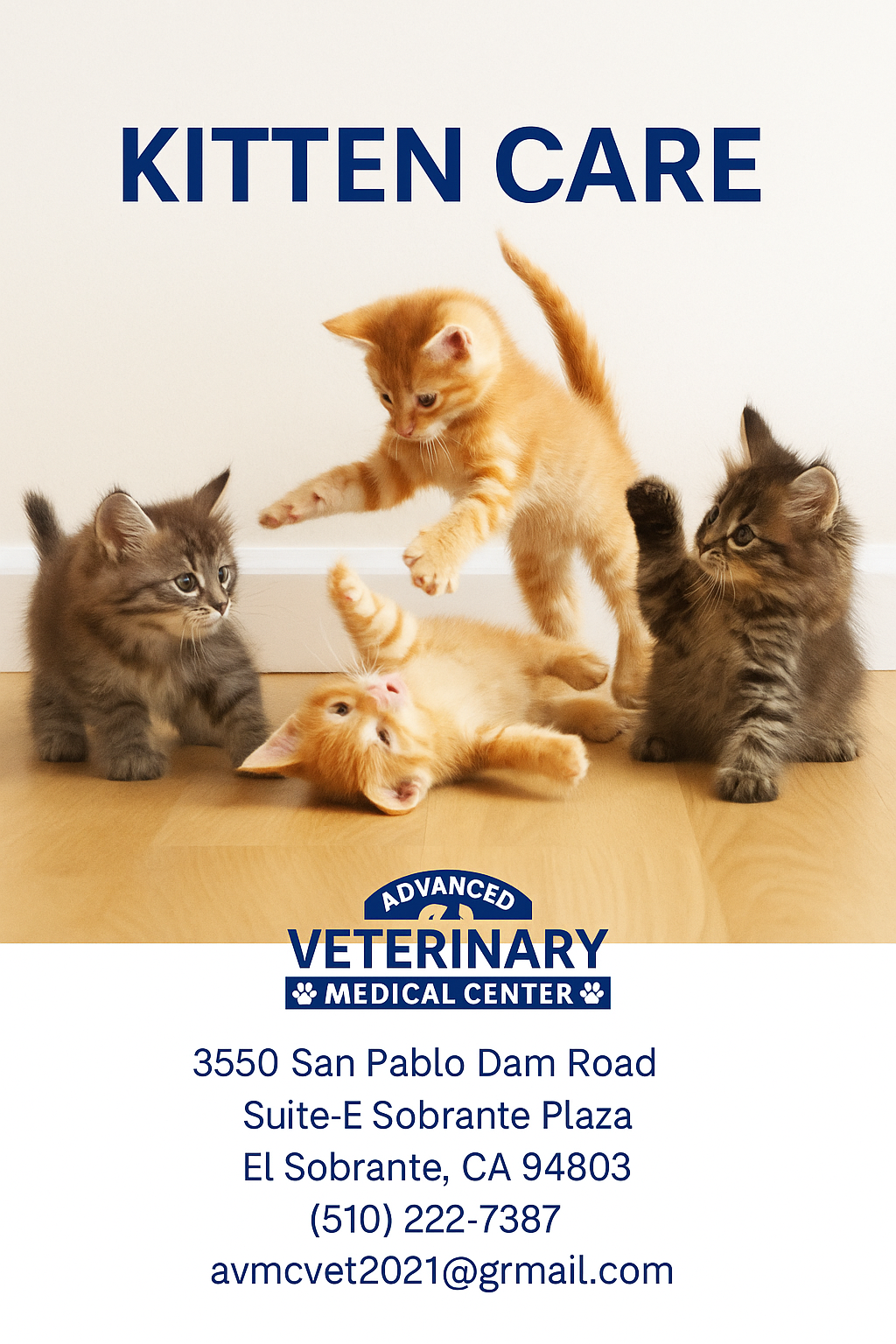
INTRODUCTION & OVERVIEW
Congratulations on Your New Kitten!
This booklet is your go-to guide for everything you need to support your kitten’s health and happiness through their first year of life. Inside, you’ll find expert advice on:
- Home setup & daily care
- Grooming & hygiene
- Training & socialization
- Preventive veterinary care
- Common concerns
HOME SETUP & HUSBANDRY THROUGH THE FIRST YEAR
A well-planned home environment supports your kitten’s emotional security, hygiene, and behavioral development. Their needs evolve rapidly, so adapt their setup as they grow.
1. Safe Living Environment by Age Stage
| Age Range | Key Needs | Tips |
|---|---|---|
| 6–12 weeks | Warmth, confinement, supervision | Confine to one safe room; provide cozy bed and hiding box |
| 3–6 months | Exploration, play, enrichment | Add vertical climbing space, puzzle feeders, scratching posts |
| 6–12 months | Gradual independence, consistency | Increase home access, continue play and training routines |
2. Litter Box Setup
- Follow the rule: one litter box per cat, plus one extra, to prevent territorial issues and encourage consistent use.
Types of Litter Boxes:
- Standard open boxes: Most cats prefer these for ease of access and ventilation.
- Covered boxes: Provide privacy but may trap odors; some cats dislike enclosed spaces.
- Top-entry boxes: Good for reducing litter scatter but may be hard for kittens or senior cats to enter.
- High-sided boxes: Ideal for cats who spray or kick litter vigorously.
- Low-sided boxes: Helpful for very young kittens, geriatric cats, or those with mobility issues.
Litter Types:
- Clumping clay litter: Easiest to clean and typically well accepted.
- Unscented litter: Strongly recommended to prevent aversion; most cats dislike perfumes.
- Non-clay alternatives: Corn, wheat, pine, paper, or silica gel litters—transition gradually and observe for preference.
- Dust-free options: Ideal for cats with asthma or allergies.
Litter Box Location Tips:
- Quiet, private, and low-traffic areas are best.
- Ensure boxes are not near noisy appliances or high foot traffic.
- Avoid placing close to food and water dishes.
- In multi-story homes, place at least one box on each level.
- Avoid grouping all boxes together; spread them out to offer choices.
Cleaning & Maintenance:
- Scoop at least once daily; some cats require twice-daily scooping.
- Fully replace litter and clean the box with unscented soap and warm water weekly.
- Avoid harsh cleaners like bleach or ammonia, which may deter use.
- Observe for changes in usage that might indicate medical issues or litter box dissatisfaction.
3. Temperature & Comfort
- Ideal indoor temperature: 70–75°F.
- Kittens do not regulate temperature well <12 weeks.
- Provide warm bedding, especially for small or short-haired breeds.
4. Indoor Living (Recommended)
- Promotes a longer, healthier life by minimizing environmental hazards.
- Provides a stable, enriched environment essential for kitten development.
- Reduces stress and behavior issues caused by unpredictable outdoor stimuli.
- Supports consistent interaction, supervision, and preventive veterinary care.
- Ensures controlled access to nutrition, play, and socialization.
Risks of Free-Roaming Outdoor Access:
- Injury or Death: Risk from cars, dogs, wildlife, or falls.
- Disease Exposure: Higher likelihood of contracting FIV, FeLV, parasites, and abscess-causing infections from other animals.
- Poisoning: Exposure to antifreeze, rodenticides, toxic plants, and human food waste.
- Theft or Getting Lost: Unidentifiable or unmicrochipped cats may not return home.
- Environmental Impact: Free-roaming cats negatively affect wildlife populations, particularly birds and small mammals.
Outdoor Access (if any):
- Only via cat-proof enclosures or leash walks.
5. Scratching Behavior
- Provide both vertical and horizontal scratchers to suit different scratching preferences.
- Use a variety of materials to identify what your kitten prefers:
- Sisal rope: Durable and favored by most cats.
- Corrugated cardboard: Affordable and widely accepted.
- Carpeted surfaces: Soft but may confuse cats about what is allowed to be scratched.
- Natural wood or bark textures: Appealing for cats who enjoy rough, natural surfaces.
- Vertical posts should be at least 30 inches tall to allow full-body stretching and must be stable to prevent tipping.
- Horizontal scratchers can include flat pads, angled ramps, or lounge-style scratchers.
- Place scratchers near high-traffic areas, resting spots, or furniture your cat may otherwise target.
- Use attractants such as catnip, silvervine, or feline pheromone sprays to encourage use.
- Reward your kitten for using appropriate scratching surfaces with treats, praise, or play.
- Never punish for scratching—redirect gently and consistently.
- Refresh or replace scratchers periodically to maintain interest.
6. . Kitten-Proofing Your Home
- Secure electrical cords with cord covers to prevent chewing.
- Remove or place out of reach all toxic plants—especially lilies, sago palm, philodendrons, and dieffenbachia.
- Store medications, cleaning products, and cosmetics in cabinets with childproof latches.
- Keep small objects (rubber bands, hair ties, sewing needles, paper clips, coins) off the floor and counters to avoid ingestion.
- Use lidded trash cans or keep them in cabinets to prevent foraging.
- Close toilet lids to avoid drowning or drinking contaminated water.
- Block access behind or beneath appliances and furniture where kittens can get trapped.
- Remove or secure plastic bags, strings, ribbons, tinsel, and dental floss to avoid choking and intestinal blockages.
- Secure tall items like shelves or lamps to prevent tipping if climbed.
- Ensure all window screens are tight-fitting and balcony railings are secure.
- Use baby gates or closed doors to restrict access to high-risk areas like garages, stairwells, and utility rooms.
7. Daily Care Essentials
| Task | Frequency | Notes |
|---|---|---|
| Feeding | 3–4x/day | See nutrition section |
| Water | 2x/day+ | Fresh, clean water always available |
| Litter Box | Scoop daily | One box per cat + one |
| Play/Exercise | 3–5 sessions | Use wand toys, balls, climbing shelves |
| Rest | 16–20 hrs/day | Provide quiet areas for undisturbed sleep |
| Nail Trims | Every 2–4 wks | Start young; use feline clippers |
| Grooming | 1–2x/week | Brush short coats weekly, long coats more often |
NUTRITION
1. Choosing a Complete Kitten Diet
- Look for AAFCO statement: “Complete and balanced” for growth or all life stages.
- Use brands with veterinary nutrition oversight.
- Avoid: raw diets, home-cooked meals without veterinary formulation, unregulated boutique diets.
Veterinary-Recommended Brands (2025):
- Royal Canin
- Purina Pro Plan
- Hill’s Science Diet
- Iams Kitten
2. Feeding Schedule
| Age | Meals/Day | Notes |
|---|---|---|
| 6–12 weeks | 4 | Small meals, frequent feeding |
| 3–6 months | 3 | Adjust based on weight & appetite |
| 6–12 months | 2–3 | Maintain consistent schedule |
3. Portion Control & Growth
- Monitor Body Condition Score (BCS) regularly.
- Avoid free-feeding dry food unless directed.
- Treats <10% of daily intake; use freeze-dried meat or commercial treats.
4. Transition to Adult Food
- Switch at 10–12 months old.
- Transition over 7 days by mixing increasing portions of adult formula.
GROOMING & HYGIENE
- Short-haired cats: Brush weekly using a soft-bristle or rubber grooming brush.
- Long-haired breeds: Brush daily with a slicker brush or wide-tooth comb to prevent matting and tangles.
- Double-coated or shedding breeds: Use an undercoat rake or deshedding tool (e.g., FURminator) during seasonal shedding.
- For sensitive areas like the face, ears, or tail, use a soft baby brush or grooming glove.
Introducing Grooming to Kittens
- Begin brushing sessions early—start with brief, gentle sessions of 1–2 minutes.
- Use positive reinforcement such as treats, praise, or play to build a positive association.
- Choose a quiet, low-stimulation environment.
- Allow your kitten to sniff and inspect grooming tools before use.
- Start by petting with your hand, then transition to the brush.
- Increase grooming time gradually and include new body areas as comfort improves.
- Regularly handle paws, ears, and tail outside of grooming to desensitize your kitten to touch.
- Bathing: Rarely needed; only when soiled. Use feline-safe shampoo and lukewarm water.
Nail Trimming
- Every 2–4 weeks.
- Use feline nail trimmers; avoid cutting the quick.
Dental Care
- Daily brushing ideal.
- Use feline enzymatic toothpaste.
- Supplement with VOHC-approved dental treats or water additives.
Litter Box Hygiene
- Scoop daily, change litter weekly.
- Wash box with mild soap monthly.
SOCIALIZATION & TRAINING
1. Kitten Socialization Timeline
- Prime window: 2–9 weeks of age, continue through 14 weeks.
- Gently handle paws, ears, face, and mouth daily.
- Expose to common sounds, vet visits, gentle handling by guests.
2. Litter Box Training
- Instinctive for most kittens.
- Use uncovered, low-sided box for young kittens.
- Praise use; never punish accidents.
3. Discouraging Undesirable Behavior
- Redirect play biting to toys.
- Never use hands or feet as toys.
- Provide vertical space, puzzle feeders, and scratching outlets.
- Use deterrents (e.g., double-sided tape) for unwanted surface use.
4. Scratching Behavior
- Provide both vertical and horizontal scratchers to suit different scratching preferences.
- Use a variety of materials to identify what your kitten prefers:
- Sisal rope: Durable and favored by most cats.
- Corrugated cardboard: Affordable and widely accepted.
- Carpeted surfaces: Soft but may confuse cats about what is allowed to be scratched.
- Natural wood or bark textures: Appealing for cats who enjoy rough, natural surfaces.
- Vertical posts should be at least 30 inches tall to allow full-body stretching and must be stable to prevent tipping.
- Horizontal scratchers can include flat pads, angled ramps, or lounge-style scratchers.
- Place scratchers near high-traffic areas, resting spots, or furniture your cat may otherwise target.
- Use attractants such as catnip, silvervine, or feline pheromone sprays to encourage use.
- Reward your kitten for using appropriate scratching surfaces with treats, praise, or play.
- Never punish for scratching—redirect gently and consistently.
- Refresh or replace scratchers periodically to maintain interest.
VETERINARY CARE
1. Vaccination Schedule
| 7-9 weeks | FVRCP, FeLV |
| 11-13 weeks | FVRCP, FeLV |
| 15-17 weeks | Rabies |
- FVRCP protects against Feline Viral Rhinotracheitis, Calicivirus, and Panleukopenia.
- FeLV is recommended for all kittens due to vulnerability; even indoor cats occasionally sneak out, so we recommend it for all kittens and cats.
- Rabies is required by law in California.
2. Parasite Prevention
- Begin monthly flea/tick and heartworm prevention by 8 weeks.
- Common options: Nexgard, Simparica, and the new formula Revolution.
- Deworm at first visit, then repeat as advised.
- Bring a fecal specimen in at the 16 week visit to check for protozoan and worm parasites.
3. Spaying & Neutering
| Procedure | Recommended Age | Benefits |
|---|---|---|
| Spay | 6-8 months | Prevents pregnancy, mammary cancer, pyometra |
| Neuter | 6-8 months | Prevents spraying, roaming, testicular cancer |
| Surgical consideratoins |
Pre-Surgical Blood Work
Pre-anesthetic screening is strongly recommended to:
- • Assess organ function (liver, kidneys)
- • Identify underlying conditions that may increase surgical risk
- • Ensure safe use of anesthetic drugs
Most clinics perform:
- • Complete Blood Count (CBC)
- • Serum Chemistry Panel
Choosing a Safe Surgical Facility
| Ask your veterinarian or surgical provider if they use the following best practices in anesthetic safety: Monitoring Method | Importance |
|---|---|
| ECG Monitoring | Detects abnormal heart rhythms in real time |
| Blood Pressure Monitoring | Ensures adequate organ perfusion during anesthesia |
| Pulse Oximetry (SpO₂) | Measures blood oxygen saturation |
| End-tidal CO₂ Monitoring | Assesses respiratory status and ventilatory adequacy |
| Dedicated Anesthesia Tech | One person solely focused on monitoring your pet under anesthesia |
These measures significantly reduce complications and improve surgical outcomes.
BEHAVIOR & WHEN TO CALL THE VET
Urgent Signs:
- Refusing food >24 hrs.
- Vomiting/diarrhea >24 hrs.
- Lethargy, collapse
- Difficulty breathing
- Swollen abdomen
- Pale gums, seizures
- Abscess
- Open wound
Non-Urgent but Concerning:
- Persistent scratching
- Hair loss or scabs
- Limping >24 hrs.
- Eye/nose discharge
- Bad breath or dental tartar
Behavioral Changes to Monitor:
- Sudden aggression or hiding
- Excessive thirst or urination
- Regression in litter box use
For questions or to schedule an appointment:
Advanced Veterinary Medical Center
3550 San Pablo Dam Road, Suite E – Sobrante Plaza
El Sobrante, CA 94803
(510) 222-7387
AVMCVET2021@gmail.com