Reptile Nutrition
Bearded Dragon Diet
Current feeding guidance for captive bearded dragons, with emphasis on life-stage feeding, insect quality, plant variety, calcium balance, UVB exposure, and practical home management.
Diet Overview
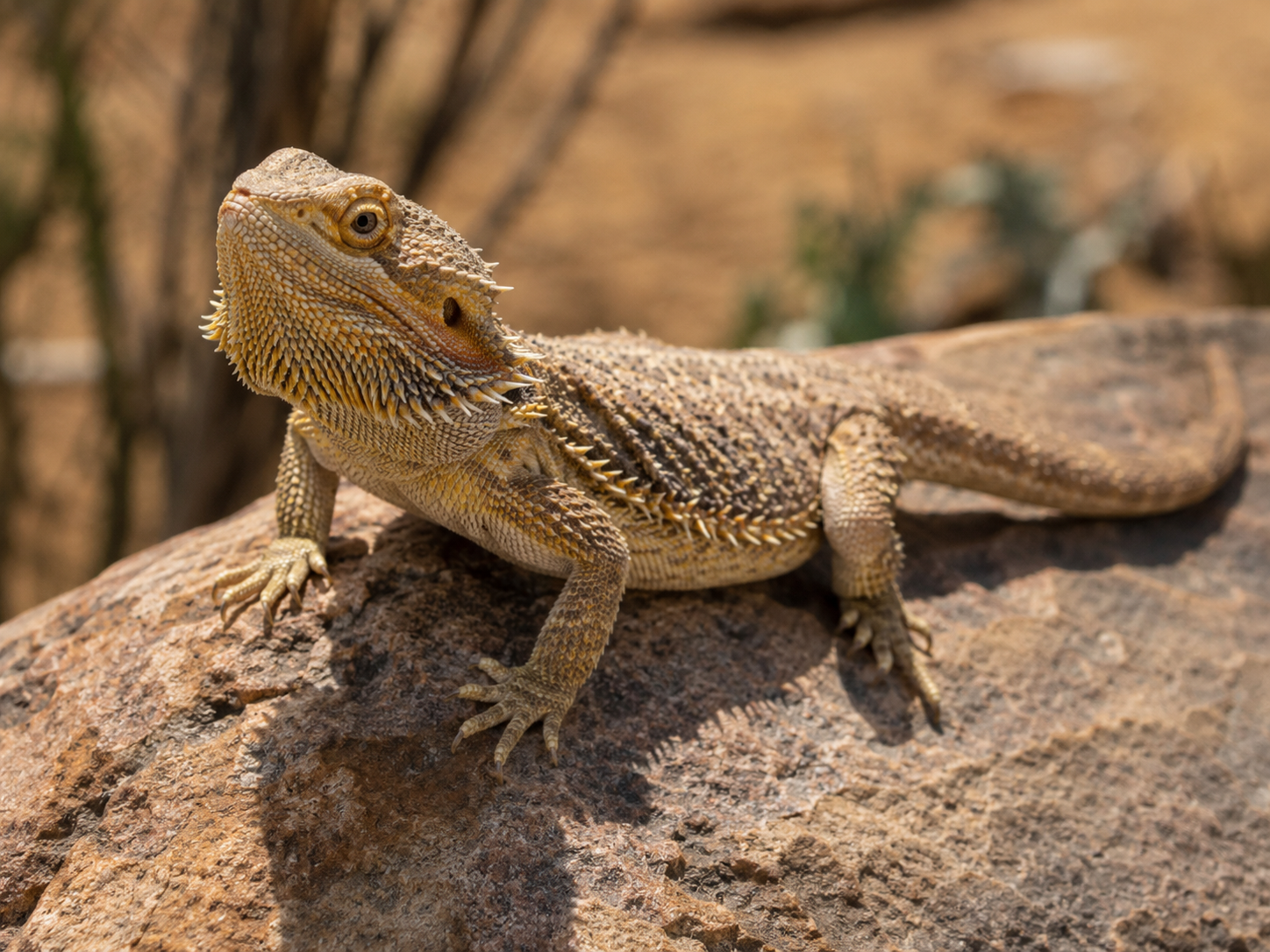
Bearded dragons are omnivorous lizards. A healthy captive diet combines appropriate animal foods with a varied plant component and should change as the dragon matures.
Young, rapidly growing dragons generally require a larger proportion of insects and other invertebrate prey. As dragons mature, the diet should shift toward a greater plant component. Current veterinary reviews recommend that subadult and adult bearded dragons receive at least about 50% high-fiber plant matter, with insects making up less than half of the overall diet.
Diet must be considered together with temperature, basking opportunity, UVB exposure, hydration, and enclosure management. Metabolic bone disease and other nutritional problems commonly reflect both dietary imbalance and husbandry errors.
Life-Stage Feeding
- Juveniles: generally require more frequent feeding and a higher proportion of appropriately sized insects than adults.
- Subadults: transition gradually toward a greater plant component while still maintaining good growth and body condition.
- Adults: should receive a diet weighted more heavily toward leafy greens and vegetables, with insects remaining an important but smaller portion of the overall plan.
Evidence-based data defining exact quantities and feeding frequencies are still limited, so percentages should be treated as practical targets rather than rigid formulas. Feeding should clearly evolve with age, and continuing a very insect-heavy juvenile diet into adulthood can contribute to obesity and nutritional imbalance.
Insects and Other Animal Foods
Good staple feeder insects may include gut-loaded crickets, dubia roaches, and black soldier fly larvae. Silkworms can also be useful, while hornworms are best used as part of a varied rotation rather than as the sole feeder. Insects should always be appropriately sized for the dragon.
Be particularly careful with crickets and other larger prey items. As a practical safety rule, do not feed prey that is larger than the space between the bearded dragon's eyes. Oversized prey can be difficult to swallow and may contribute to regurgitation, gastrointestinal obstruction, or other complications, especially in younger animals.
Gut loading improves insect quality. Current reptile-nutrition guidance recommends feeding insects a calcium-rich, nutritionally complete diet before they are offered. Commercial feeder insects generally have an unfavorable calcium-to-phosphorus ratio unless they are properly gut loaded and supplemented.
Mealworms, superworms, and waxworms are usually better treated as occasional items rather than primary staples. Pinkie mice should not be considered a routine food for most pet bearded dragons.
Greens and Vegetables
A fresh salad should be offered daily and should form a major part of the subadult and adult diet. Emphasize calcium-rich, low-oxalate greens and a varied mixture of vegetables.
Useful staple greens
- collard greens;
- mustard greens;
- turnip greens;
- dandelion greens and flowers from untreated areas;
- endive and escarole;
- watercress;
- bok choy in rotation.
Useful vegetables
- butternut or acorn squash;
- bell peppers;
- green beans;
- shredded carrot in moderate amounts;
- peas or snap peas in moderation;
- small amounts of cactus pad (Opuntia) with spines removed.
Chop or shred produce so that the dragon eats a mixed bite rather than selecting only favored pieces. Variety over time is more valuable than depending on any one vegetable.
Fruit and Treats
Fruit should be only a very small part of the diet. Small amounts of berries, melon, papaya, mango, or apple can be used as occasional treats, but fruit should not displace the more important greens and vegetables.
Overuse of fruit adds unnecessary sugar and can encourage selective eating.
Calcium, Vitamins, and UVB Exposure
Appropriate calcium intake and reliable UVB exposure are essential for healthy bone development and muscle function. A recent veterinary review recommends lightly dusting offered foods with plain calcium powder at every feeding, while also ensuring that feeder insects are properly gut loaded.
A reptile multivitamin containing appropriate vitamins, including preformed vitamin A and vitamin D, is generally used about weekly; monthly is considered a minimum in the recent review. The amount and frequency should still be adjusted for the total diet, commercial foods, life stage, reproductive status, and veterinary advice so supplementation is not duplicated excessively.
UVB lighting is a core part of nutritional management. Follow the lamp manufacturer's recommended distance and replacement interval, and remember that glass and most clear plastics block useful UVB. Proper basking temperatures are also necessary because digestion and calcium metabolism are temperature dependent.
Feeding Schedule
- Juveniles: require frequent feeding because of rapid growth, with appropriately sized insects offered more often than in adults while greens are introduced from an early age.
- Subadults: continue regular feeding while the plant portion is progressively increased.
- Adults: should receive high-fiber plant foods daily, with insects offered in controlled amounts rather than as unlimited daily prey.
Appetite should be interpreted together with body condition, temperature, season, and health status. Persistent appetite loss is not simply a dietary issue and should prompt evaluation of husbandry and health.
Water and Hydration
Fresh, clean water should be available at all times in a stable, easy-to-clean dish. Some dragons also obtain moisture from their vegetables.
Hydration depends on more than a water bowl alone. Overall enclosure temperature, humidity, diet, and health all influence hydration status. A dragon with wrinkled skin, persistent lethargy, or abnormal urates may need veterinary evaluation.
Foods to Avoid or Limit
- Wild-caught insects: avoid because of pesticides, parasites, and other contaminants.
- Fireflies: never feed them; they can be highly toxic to reptiles.
- Iceberg lettuce: poor nutritional value and not an appropriate staple.
- Large amounts of spinach, Swiss chard, or beet greens: these should not dominate the diet because their oxalate content can interfere with calcium balance.
- Dog food, cat food, meat, and processed human food: inappropriate as routine foods.
- Excessive fatty larvae or worms: reserve as occasional treats rather than staples.
Sample Feeding Plan
An adult bearded dragon might receive a daily mixed salad of collard greens, mustard greens, endive, squash, and bell pepper, with insects such as gut-loaded dubia roaches or crickets offered several times per week in controlled amounts.
A juvenile would typically receive insects more frequently while still being offered chopped greens and vegetables daily so that plant eating becomes part of the normal routine.
Selected References
- Barboza T, Bercier M. An Update on Companion Inland Bearded Dragon (Pogona vitticeps) Nutrition. Veterinary Clinics of North America: Exotic Animal Practice. 2024;27(1):71–84.
- Merck Veterinary Manual. Nutrition in Reptiles. Reviewed September 2025; updated October 2025.
- Merck Veterinary Manual. Management and Husbandry of Reptiles.
- Merck Veterinary Manual. Nutritional, Metabolic, and Endocrine Diseases of Reptiles.
- UC Davis School of Veterinary Medicine. Bearded Dragon Care.
- Divers SJ, Stahl SJ. Mader's Reptile and Amphibian Medicine and Surgery. 3rd ed. Elsevier; 2019.